The Design
Below is a summary of key elements.
View the full 45-slide proposal here.
The Spatial Framework
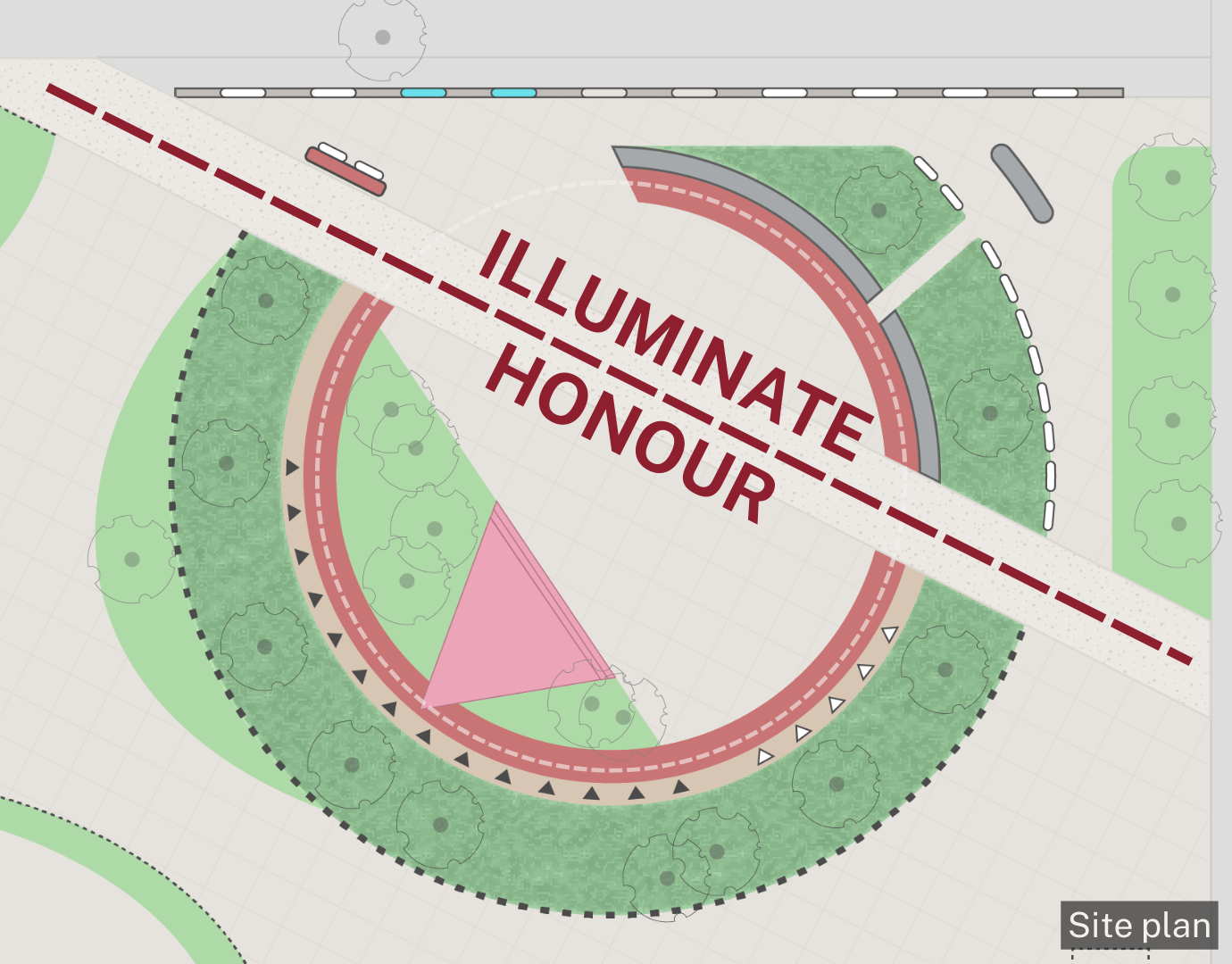
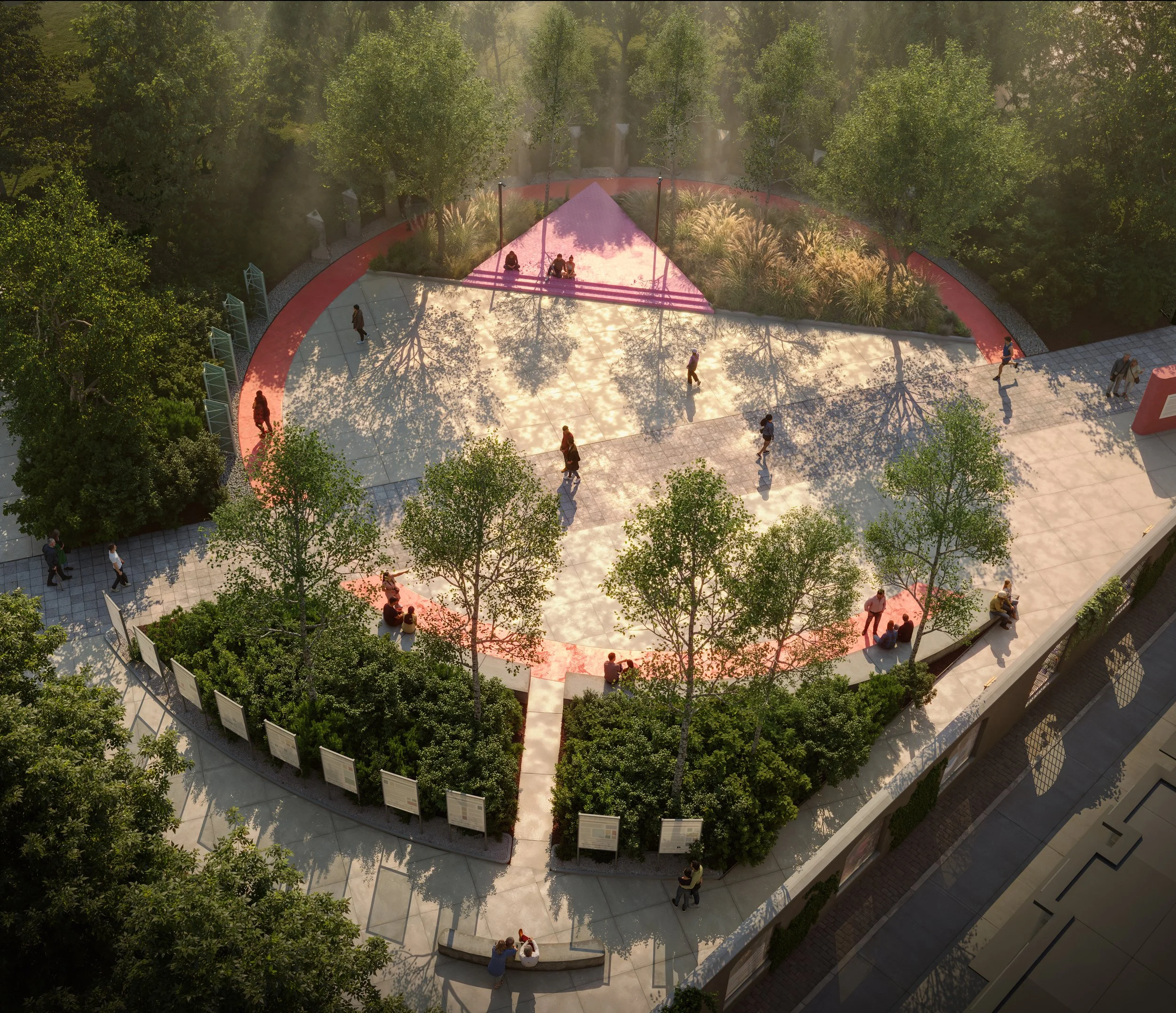
The site is organized through a continuous circular armature, extending the memorial’s primary geometry as a formal reference to the informal circles of care that sustained communities during the epidemic.
Two spatial registers structure the design.
Honour
Consolidates the memorial’s physical and symbolic presence. Through enclosure, alignment, and threshold definition, the composition is clarified and its hierarchy restored. Reparative rather than revisionist, this strategy intensifies legibility and reinforces sanctuary.
Illuminate
Extends the memorial’s public interface. Interpretive layers introduce broader, intersectional histories beyond the immediate sanctum, preserving contemplative integrity while expanding public understandin
Honour
Memorial Base & Pillars
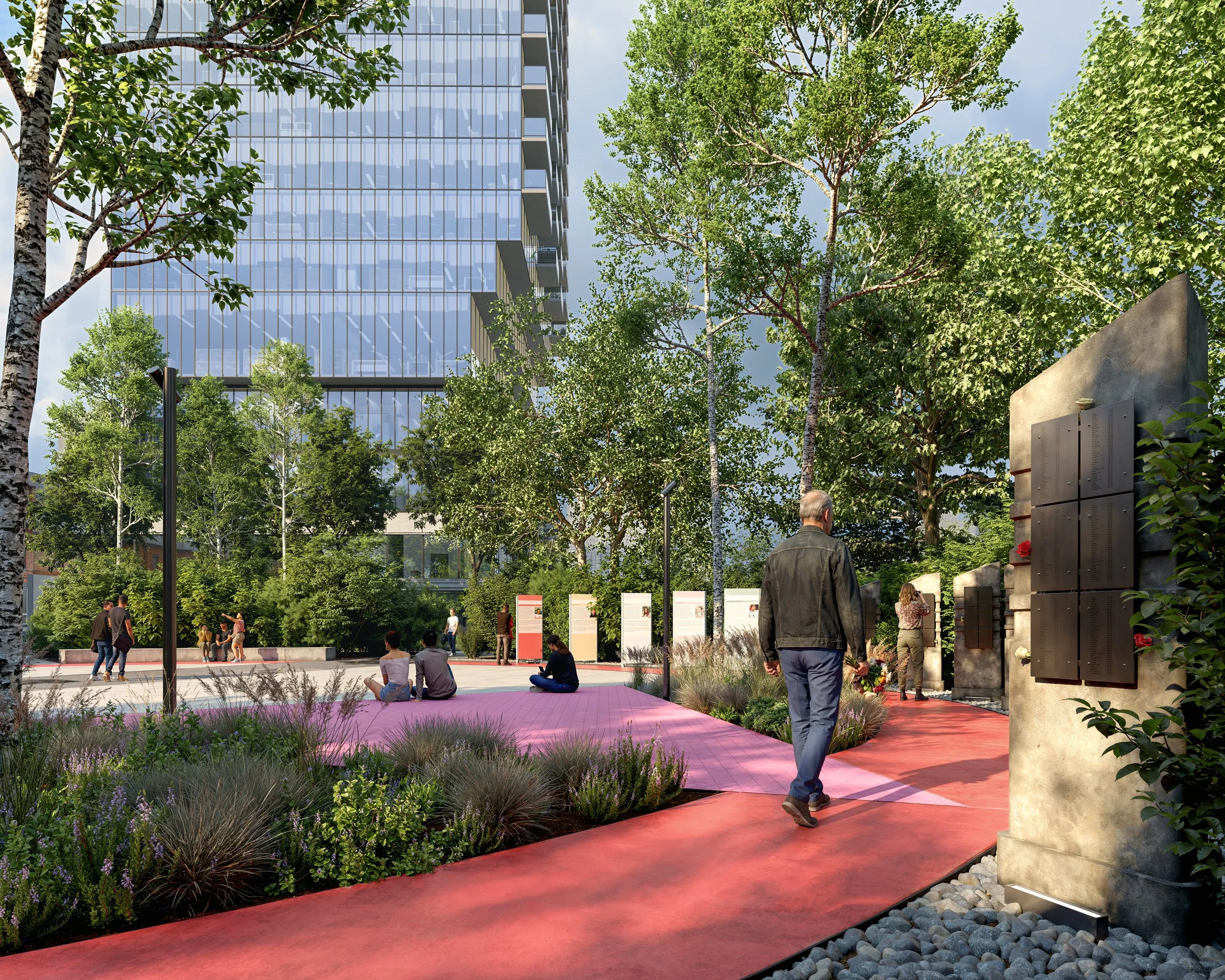
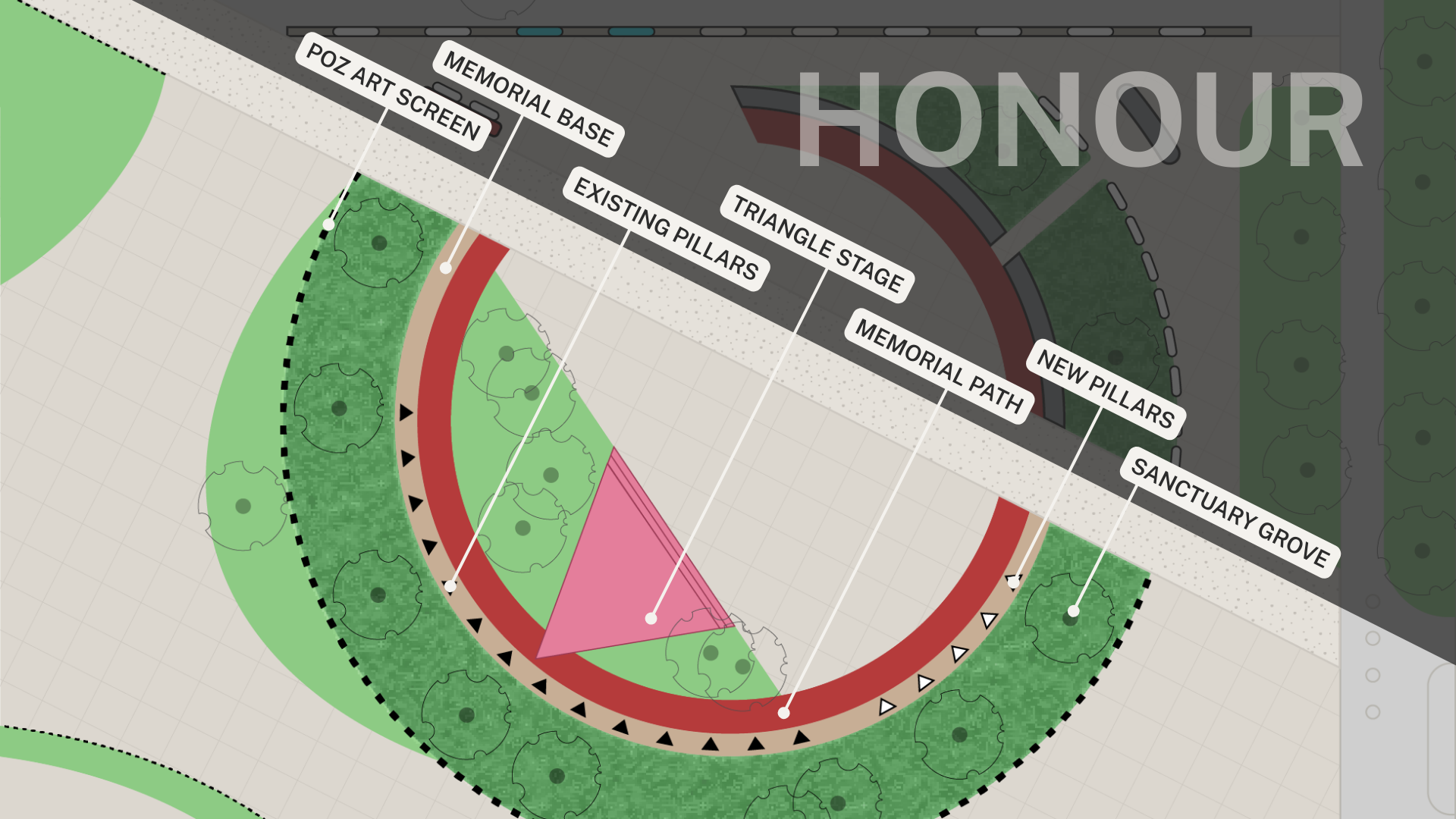
The memorial base is extended along its arc to strengthen architectural presence and enable future pillars. All 14 existing pillars are restored and unified through a consistent typographic system. Capacity expands to accommodate thousands of additional names. Pillar 15 remains intentionally vacant, acknowledging the ongoing epidemic.
Triangle Stage
The triangular platform is reinstated in pink pigmented pavers, restoring its symbolic clarity as a gesture of queer strength and liberation, and honouring the gay and bi men that make up over 70% of AIDS deaths in Canada.
Sanctuary Grove
A 5 m deep vegetative buffer re-establishes enclosure and acoustic protection, ensuring the memorial reads as a distinct, intentional landscape.
New Pillars
New pillars extend the memorial’s capacity while deepening its meaning. Demountable vertical panels introduce portrait and biography, transforming names into stories and foregrounding communities historically underrepresented in public commemoration.
Poz Art Screen
A continuous weathered steel artwork defines the grove’s perimeter while honouring HIV-positive creators through a public competition process.
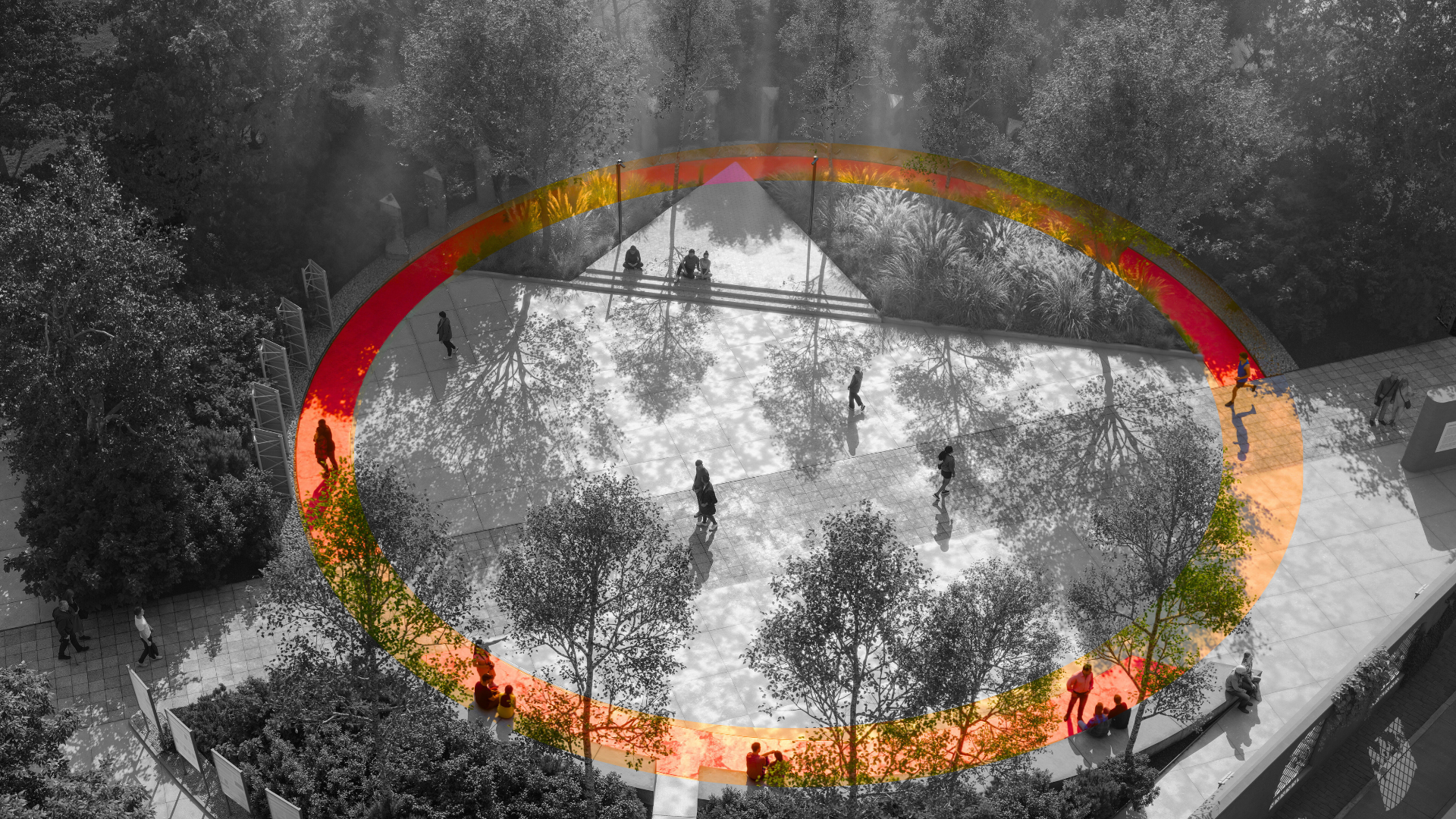
Circle of Care
In the early years of the epidemic, communities affected by AIDS were abandoned by their governments and ostracized by society. They survived by forming deep, interdependent networks of care, tending to one another in hospital rooms, apartments, and makeshift wards when institutions refused to do so.
The red Memorial Path traces that legacy. By linking the pillars to the Reflection Commons and completing the arc, it makes visible the structure of mutual support that sustained a generation. To sit within the curve is to enter the circle — not as an observer of the names, but within the same geometry of living remembrance.
Illuminate
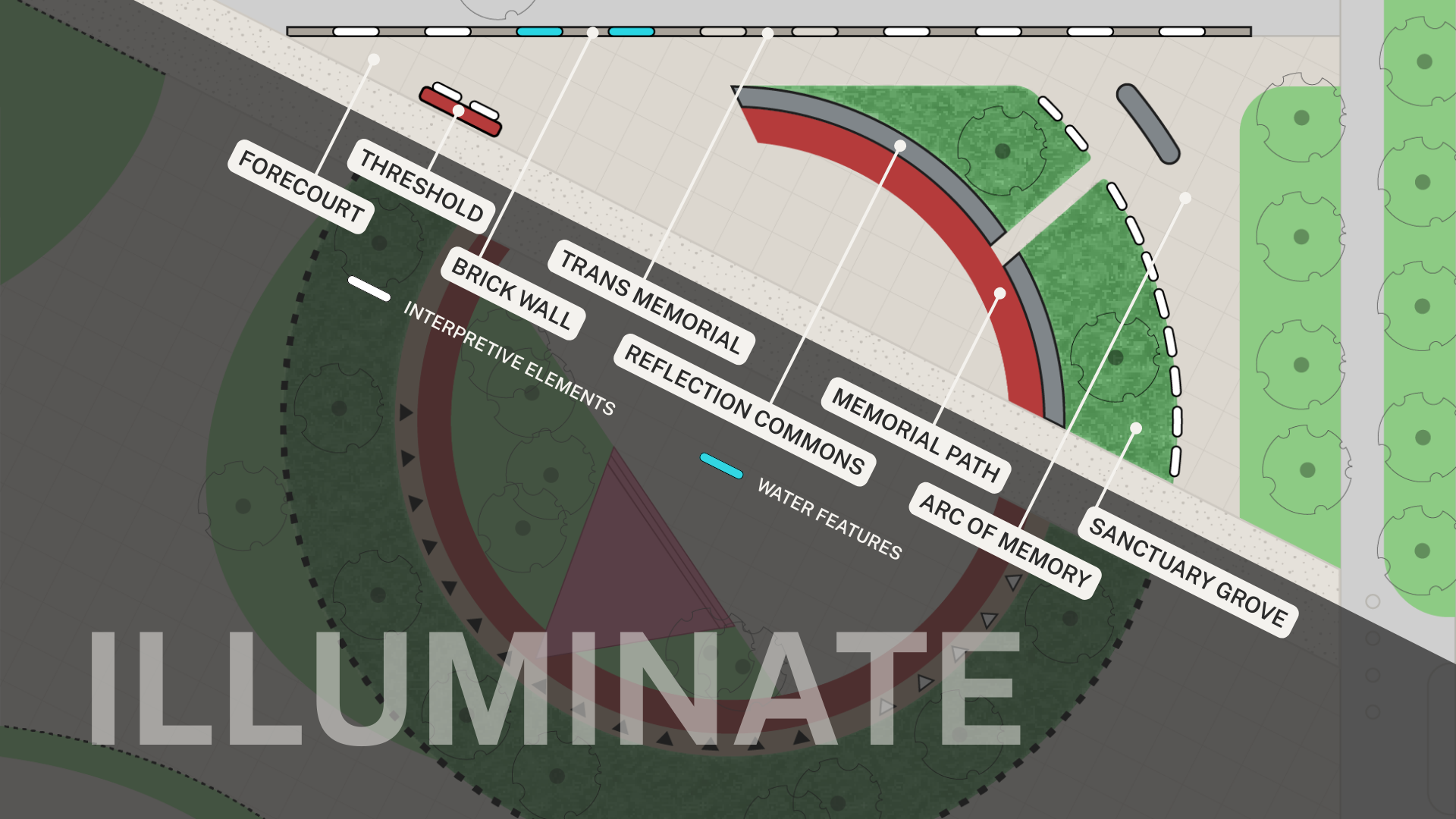
Arc of Memory
Ten large-format panels ensure that the memorial does not speak only through names, but through history. Positioned just beyond the outside of the sanctum, it creates space to tell the fuller story of the epidemic — activism, survival, criminalization, and the communities too often left out of public record. Grief remains protected at the centre; education and amplification occur at its edge.
Echoes
Echoes culminates in two light-based installations aligned on an axis through the memorial’s centre. One creates an empty spotlight on the stage, a quiet acknowledgment of the leadership vacuum created by the epidemic. The other projects a vertical beam into the sky, visible across the city. Together they mark the scale of loss and assert presence where silence once prevailed.
Reflection Commons
Curved concrete benches extend the memorial’s geometry, allowing visitors to sit within the same arc as the pillars and inhabit the Circle of Care.
Threshold
The Threshold establishes a clear point of arrival and gives the memorial a defined civic presence from Church Street. A red concrete wall marks entry without enclosing it, while interpretive elements introduce the memorial’s history before visitors step inside.
The Trans Memorial
The Trans Memorial remains in place. Echoes provides it with clearer spatial definition and breathing room, affirming its autonomy while acknowledging shared histories with The AIDS Memorial. A shared bench links the two sites in quiet solidarity.